
Dr. Don LivermoreMaster Blender
Behind every bottle of J.P. Wiser’s is a set of choices. Choices about grain, yeast, wood, and time.
Those choices are guided by Dr. Don Livermore, PHD, Master Blender at Hiram Walker & Sons and one of the most influential figures in Canadian whisky today. With a background spanning microbiology, brewing and distilling, and a PhD focused on wood science, Dr. Livermore brings a rare blend of scientific rigour and creative intuition to Canadian whisky making.

Interview with Dr. Don Livermore, J.P. Wiser’s Master Blender
In this interview, Dr. Livermore, PHD, shares how his scientific training shapes his approach to blending, how J.P. Wiser’s balances tradition and innovation, and why Canadian whisky’s flexibility is its greatest strength.
The questions below explore how Canadian whisky is made from the inside out, from fermentation and blending philosophy to innovation, wood science, and the role of history in shaping flavour.
WHAT DID YOU STUDY, AND HOW DOES YOUR SCIENTIFIC BACKGROUND SHOW UP IN YOUR DAY-TO-DAY AS A MASTER BLENDER?
The day-to-day work of a Master Blender can be summed up by the Canadian Whisky Flavour Wheel™. The science sits at the centre of that wheel.
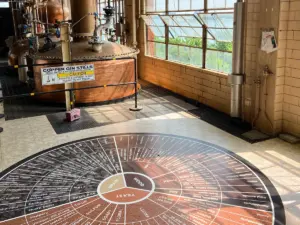
My background in microbiology taught me that yeast is the heartbeat of the distillery, and that many of the flavours found in whisky originate during fermentation. My MSc in Brewing and Distilling reinforced the importance of grain quality, not just the type of grain used, but how it is grown, stored, and processed, all of which can significantly affect the final whisky.
My PhD focused on the impact of wood on whisky. Barrel choice, how the wood is prepared and charred, the previous contents of the cask, and the length of aging all influence the specific flavour profile of a blend.
To make consistent, high-quality Canadian whisky, a Master Blender must understand how yeast, grain, and wood work together.
WHEN YOU THINK ABOUT YOUR ROLE TODAY, WHAT ARE THE TWO OR THREE DECISIONS YOU MAKE THAT HAVE THE BIGGEST IMPACT ON HOW J.P. WISER’S TASTES?
Three decisions have had the greatest impact on J.P. Wiser’s during my career: the introduction of new oak into our blends, a relentless focus on ingredient quality, and a commitment to innovation.
The use of new oak in Canadian whisky began with my PhD research. Historically, Canadian whisky relied primarily on once-used bourbon barrels or multi-use Canadian whisky casks. This approach made sense for cost control and for producing grain-forward styles. What we discovered through research, however, was that new oak casks can generate four to five times more vanilla, caramel, and toffee notes than once-used barrels.
We began incorporating new oak into J.P. Wiser’s blends to help balance the natural spice of rye. Today, expressions like J.P. Wiser’s 10 Year, 15 Year, and Legacy all include some proportion of new wood, calibrated to the level of rye in each recipe. This approach has become a defining signature of the J.P. Wiser’s profile and a key point of differentiation within Canadian whisky.
Making Canadian whisky is similar to cooking curry chicken. Chicken is the main ingredient, but curry is the spice that defines the dish. In Canadian whisky, corn is the foundation, and rye is the spice. Because we ferment, distill, and age grains separately, we can control flavour at the end of aging by blending specific recipes that account for grain type, distillation method, barrel type, and age.
This is why Canadian whisky can be called rye whisky regardless of the actual rye percentage. Just like adjusting the amount of curry in a dish, we can dial the spice level up or down by adjusting rye content. That balance is the art of blending. Rye is critical to our process because it shapes the overall flavour profile.
Ingredient quality underpins all of this work. Over my career, we have worked closely with growers to secure specific grain varieties with desirable flavour traits, supported by contracts that ensure proper storage and handling.
The responsibility of a Master Blender is to leave the whisky inventory stronger than they found it, in both quality and diversity. I think of inventory as a painter’s palette: the more colours available, the greater the creative potential. Over my tenure, we have expanded that palette by introducing new cask types, different grain varieties, and varied distillation methods. This flexibility allows us to respond to consumer needs and continue pushing Canadian whisky forward.
WHAT PART OF BLENDING CANADIAN WHISKY DO PEOPLE MOST UNDERESTIMATE OR MISUNDERSTAND?
Blending is beautiful. I often compare Canadian whisky to buying paint at a store. The store starts with white paint, and the customer chooses the final colour. The clerk adds different inks until the desired shade is achieved. That is Canadian whisky.
All the components come together at the end, as a recipe.
In many other whisky categories, the approach is fixed from the start. Grains are combined into a mash bill, fermented together, distilled together, and aged together. Using the same paint analogy, that would require every possible colour to already exist on the shelf. Once the ink is mixed into the can, it cannot be removed.
Canadian whisky works differently. By isolating grain types, distillation methods, and barrel treatments, we preserve flexibility until the final blend. That flexibility allows us to adapt, innovate, and create flavour profiles that respond to what consumers want today.
IF YOU HAD TO DESCRIBE YOUR BLENDING PHILOSOPHY IN A SENTENCE OR TWO, WHAT WOULD IT BE?
To be a successful Master Blender, it comes down to making the right choices at every stage. That means putting strict quality checks in place throughout the process. If a whisky doesn’t meet the criteria, it doesn’t move forward.
When each component in a blend is made properly, my job becomes straightforward. I rely on the expertise of our people across the distillery to make the right decisions along the way, so that by the time blending begins, the foundation is already sound.
HOW DO YOU BALANCE TRADITION AND INNOVATION WHEN YOU ARE CREATING OR REFINING WHISKIES FOR J.P. WISER’S?
The earliest roots of Canadian whisky were closer to moonshine. It was unaged, full flavoured, and often made with inconsistent ingredients. Innovators like J.P. Wiser helped shape what we now recognize as traditional Canadian whisky by introducing improved distillation methods, aging whisky in wood, and prioritizing quality grain.
That legacy lives on in J.P. Wiser’s Deluxe: a light, smooth, approachable Canadian whisky with a subtle hint of rye. While we no longer make whisky using the exact same methods as 160 years ago, the goal remains the same. As technology advances, we continue to refine how we work, always with the goal of delivering the same trusted flavour expectations whisky drinkers know and love.
ARE THERE ANY PRINCIPLES FROM YOUR PHD RESEARCH ON WOOD AND AGING THAT YOU THINK MAKE J.P. WISER’S WHISKIES DISTINCT?
My PhD focused on the science of how wood interacts with whisky. Casks are not created equal. Changes in burn level, time, temperature, stave preparation, oak origin, and wood type all have a direct impact on flavour.
That research opened the door to innovation at J.P. Wiser’s. The first use of new oak in Canadian whisky recipes came through the recreation of J.P. Red Letter and J.P. Wiser’s Legacy. Leftover experimental casks from my PhD work, each with different burn profiles, later became J.P. Wiser’s Dissertation.
That same exploration led to learning how different wood inserts interact with whisky, resulting in Seven Rebels and the J.P. Wiser’s Wood Series, including Black Walnut, Hickory, Japanese Oak, Smoked Oak, and Maple. Ultimately, this journey culminated in our most premium release to date: J.P. Wiser’s 27-Year-Old Mizunara Oak. None of this would have been possible without that PhD research.
CAN YOU SHARE A RECENT PROJECT OR RELEASE WHERE YOU FELT YOU PUSHED CANADIAN WHISKY IN A NEW DIRECTION?
J.P. Wiser’s 27-Year-Old Mizunara Oak represents a significant moment for ultra-premium Canadian whisky. Mizunara oak is widely recognized as one of the rarest and most challenging woods used in whisky making, and it has appeared across categories including single malt Scotch and Irish whiskey.
In most cases, Mizunara influence comes through inserts, partial finishes, or casks that have been used multiple times. J.P. Wiser’s 27-Year-Old Mizunara is different. It was aged in new Mizunara oak casks, allowing the true character of the wood to fully express itself.
The result is a one-of-a-kind Canadian whisky that highlights the depth, complexity, and distinctive flavour profile that Mizunara oak can deliver when used without compromise.
IF YOU COULD POUR ONE J.P. WISER’S EXPRESSION FOR YOUR YOUNGER SELF ON YOUR FIRST DAY AT THE DISTILLERY, WHICH WOULD IT BE AND WHAT WOULD YOU TELL HIM?
On my first day at the distillery, I was still learning whisky. I would have poured myself a dram of J.P. Wiser’s Deluxe and explained that this is where we come from as Canadian whisky producers.
Understanding that history matters. You cannot know where you are going unless you understand the road that brought you here. That belief likely influenced my decision to write The Keeper of History.
I once had a boss tell me, “You are the Keeper of History at Hiram Walker.” At the time, I thought it meant knowing the stories of Hiram Walker, J.P. Wiser, or Henry Corby. What it really meant was understanding why we do things the way we do, and why we choose not to do other things.
Passing that understanding on to the distillers and blenders who come next is how continuity is preserved. It is how quality is maintained. And it is how J.P. Wiser’s whisky remains true to its character over time.
DR. DON’S FAVOURITES

J.P. WISER’S 15 YEAR OLD CANADIAN WHISKY
“If there was a one whisky in our portfolio that embodies the true J.P. Wiser’s spirit, I would say it’s our 15 Year Old. It’s a classic”. Perfect for special occasions or a gift for special people. J.P, Wiser’s 15 Year Old is a remarkable blend of spiced toffee and caramel notes that is deliciously smooth and complex.
Size 750ml Bottle
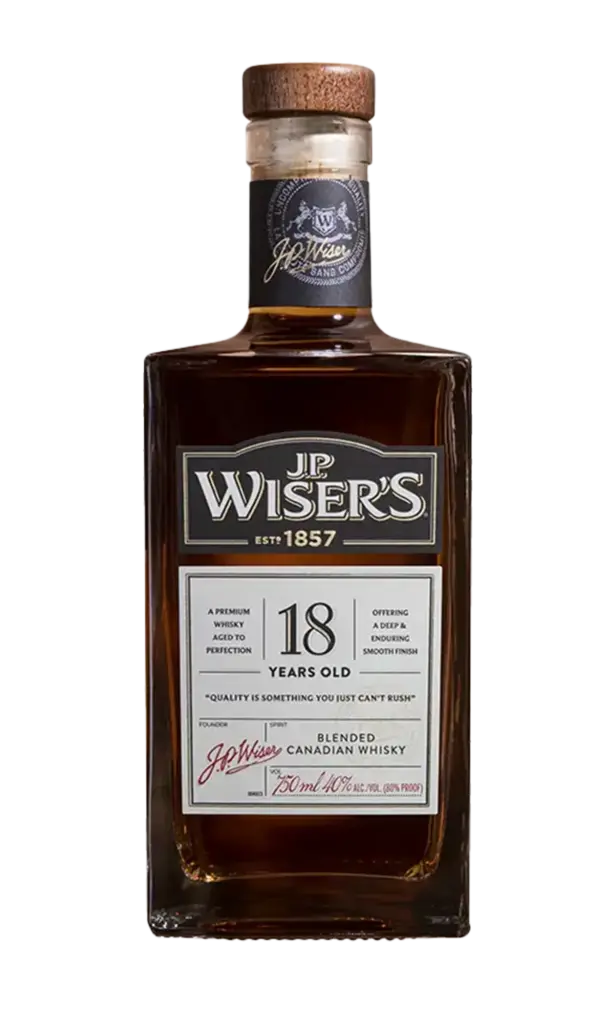
J.P. WISER’S 18 YEAR OLD CANADIAN WHISKY
“Our 18 Year Old commands attention.” Pine, spice and oak notes along with the crispness of autumn florals and the bright acidity of green apple make J.P. Wiser’s 18 Year Old a very special whisky for special moments.
Size 750ml Bottle

J.P. WISER’S 10 YEAR OLD CANADIAN WHISKY
In Dr. Don’s experience “there’s magic in numbers.” Triple barrel ageing makes J.P. Wiser’s 10 Year Old Canadian Whisky one of our Master Distiller’s favourites. Aged 10 years in new white oak, once used American bourbon, and used Canadian whisky casks, this is a bold expression of the art and craft of J.P. Wiser’s Canadian whisky.
Size 750ml Bottle